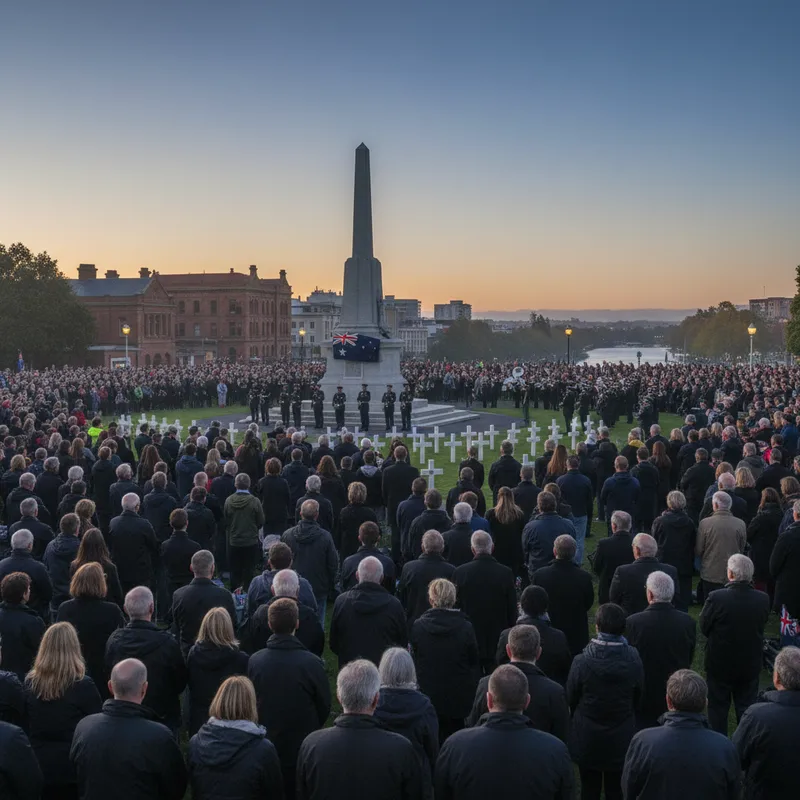
Thousands of Waikato residents stood together in the pre-dawn darkness at Hamilton’s Memorial Park this Anzac Day, their faces illuminated by solemn, blood-red lighting. Under clear, calm skies, a vast crowd of all ages gathered to honour the memory of New Zealand’s fallen soldiers, with the story of a bloody and futile battle on a Turkish mountain freshly reminding them of the enduring significance of the day.
The ceremony, which began at 6am, drew a massive turnout, with families and individuals filling the park. The silence was broken by the distinctive strains of The Last Post, a moment that saw many in the crowd visibly moved, dabbing at their eyes with handkerchiefs. The communal singing of 'Amazing Grace' and the national anthems of Australia and New Zealand further amplified the emotional weight of the occasion.
The proceedings were led by Returned and Services' Association (RSA) vice president and chaplain Lance Langley, who served as master of ceremonies. His recounting of the Battle of Chunuk Bair, a tragic and pivotal chapter in New Zealand's military history, held the attention of all present, from the oldest veterans to the youngest children clinging to their parents’ hands.
A history lesson in the dark
Chaplain Langley transported the crowd back 111 years to the Gallipoli Peninsula, retelling the valiant but ultimately doomed efforts of the Wellington Infantry Battalion, commanded by Lieutenant Colonel William Malone. For many of the hundreds of children present, it was a first, and perhaps frightening, introduction to the brutal realities their ancestors faced.
Tasked with capturing and holding the strategic high ground of Chunuk Bair, the New Zealand soldiers succeeded against immense odds. However, their victory was tragically short-lived. Vastly outnumbered by enemy Ottoman soldiers, the Anzacs were soon overwhelmed. Of the 760 soldiers who fought their way to the summit, nearly 700 were killed or wounded, including the resolute Lt Col Malone.
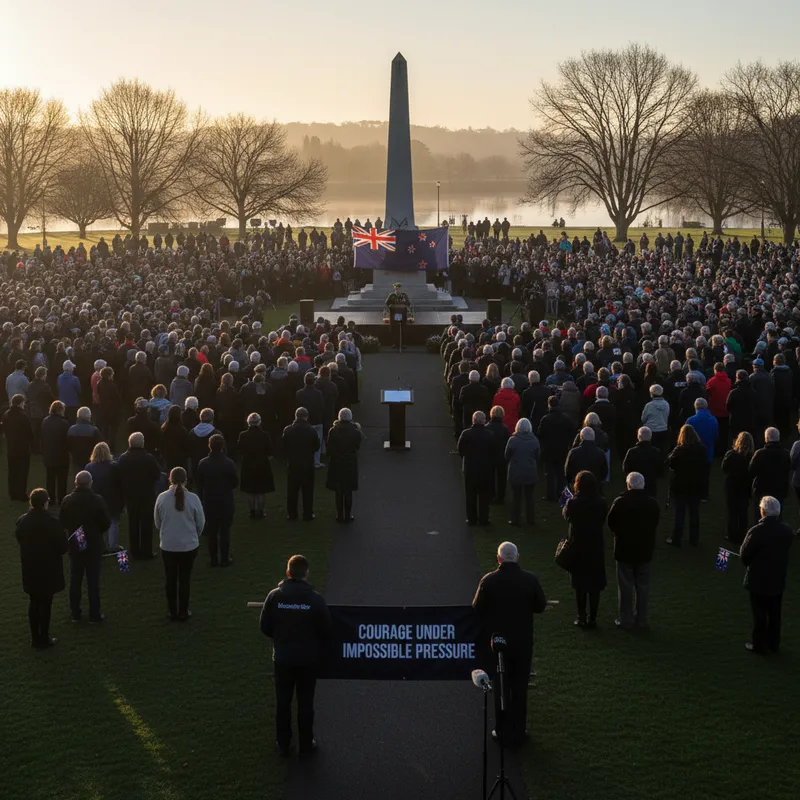
The Battle of Chunuk Bair, Langley explained, has since become "a symbol of courage under impossible pressure". The sacrifice made by those soldiers was immense, and their bravery in the face of impossible circumstances remains a cornerstone of the Anzac legend. The battle represented a devastating loss for a young nation, but also a moment that helped forge a national identity built on resilience and fortitude.
We can never repay the sacrifice they made .. We must never stop remembering them.
Generations of remembrance
The power of Anzac Day lies not just in historical retelling, but in deeply personal family traditions. For Steph Mildon and her 89-year-old father, Norman Francis Mildon, the ceremony was a poignant continuation of a lifelong ritual. "It’s just beautiful," she said, as she helped her father to his feet for The Last Post.
"We have been coming to these ceremonies forever. Dad told me he was in the front row here 70 years ago, so we made sure to get back in the front row this year,” Mildon said. Her father, a long-time Hamilton butcher, served in the armed forces on "home base," contributing to the war effort from New Zealand.
The tradition also continues for the Spence family, with three generations standing side-by-side. Paul Spence proudly wore the medals of his father, Albert, who served on the home front during the Second World War. "He did home service. mainly as a builder, although he did spend time up at North Shore, looking out for submarines," Paul shared.
Albert Spence’s contribution included helping to build Hutt Hospital for the returning injured soldiers. Paul’s grandson, Seton, represents the newest generation, having served three years with the air force as a helicopter mechanic. Their presence underscored the unbroken line of service and remembrance that defines Anzac Day for so many Kiwi families, connecting past sacrifices with present-day service.
A prayer for peace in a time of turmoil
The solemnity of the occasion was heightened by reflections on current global events. The ongoing conflicts in the Middle East and elsewhere cast a long shadow over the proceedings, lending a renewed urgency to the commemoration of past wars, much like the San Diego DA honours citizens for courage.
In his address, Hamilton mayor Tim Macindoe noted the fragility of global stability. "At this time of increasing conflict and turmoil we are reminded peace can never be taken for granted," Macindoe said. His words served as a sobering reminder that the quest for peace is a continuous struggle, as relevant today as it was a century ago. This sentiment was echoed later in the service by Chaplain Langley.
As the city’s next generation looks on, the service acts as a bridge between history and the future, linking the sacrifices at Gallipoli to a collective hope for a more peaceful world. The turnout included members of various community and emergency services, highlighting a city united in respect and remembrance, from the St John ambulance service to the Waikato Mounted Rifles, whose Lance Corporal Joel Wilson held vigil at the cenotaph throughout the morning.
The ceremony serves not only as a reflection on the cost of war but as an inspiration for civic courage and a commitment to peace, a value also recognised in civilian life, as when overseas communities honour citizens for their own incredible courage. As the first light of dawn broke over Memorial Park, the message was clear: remembrance is also a commitment to the future. As Chaplain Langley powerfully stated, the duty of the living is to ensure these sacrifices were not in vain by continuing to "pray for all who are negotiating for peace throughout our world."