Choosing a school in Hamilton can feel like trying to solve three puzzles at once: where you can legally enrol (zones), what the data really means (deciles and the newer Equity Index), and what the community quietly says about a school’s culture and support.
This guide is written for parents and guardians doing that work now, especially families planning a move for a 2027 start. It explains how zoning actually works in Hamilton, where to check the most current maps, what “decile” does and does not tell you, and how locals typically talk about reputation across the city’s main schooling pathways.
We focus on state and state-integrated schools first because zones matter there. Private schools can be a different decision, fees are higher and zoning usually does not apply.
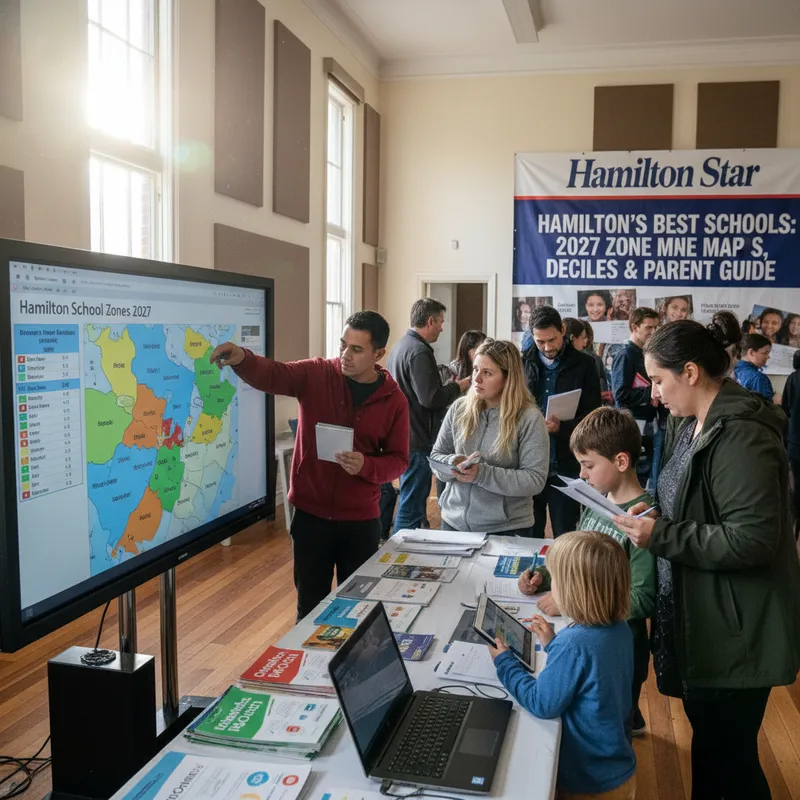
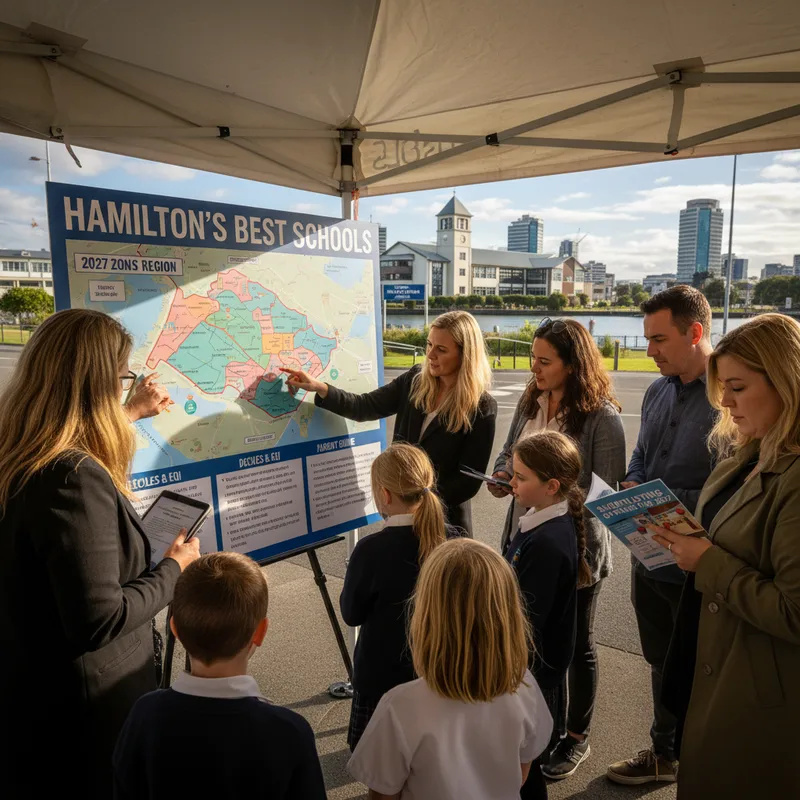
Hamilton school zones for 2027, how enrolment schemes work and where to find maps
If you are buying, renting, or even just considering a suburb shift, zoning is the first filter. Many Hamilton schools have Ministry-approved enrolment schemes to manage roll pressure. In plain terms, living in-zone usually means your child has a right to enrol, living out-of-zone usually means applying through a ballot when places are available.
The most reliable place to start is the Ministry of Education’s address check and school finder. Enter your address and confirm the school’s current enrolment scheme and boundary description, then cross-check the school’s own website for updates and ballot dates.
- Ministry of Education, Find a school tool: https://www.educationcounts.govt.nz/find-school
- Education Review Office (ERO) reports, useful for culture and improvement focus: https://ero.govt.nz/
Why 2027 matters: families are increasingly planning two to three years ahead, particularly in the north and east where growth has been strong. Zones can be reviewed and amended, so treat any screenshot shared on social media as a starting point only, not proof. If your move depends on zoning, ask the school office for the scheme link and verify your exact address against the Ministry tool.
Hamilton is also a city where transport links and build activity influence school choice. If you are weighing whether a longer commute is worth it, it helps to understand what is happening in the city centre and across key corridors. See our coverage of big changes ahead in the CBD: Hamilton CBD battles tough climate as major projects loom.
Deciles are gone, what EQI means in 2027, and how to interpret “academic performance”
Deciles used to be the headline number people asked about at open nights. They were never a direct measure of teaching quality, but they were often misused as a proxy for “good” or “bad” schools. The Government replaced deciles with the Equity Index (EQI) in 2023. EQI is used to allocate resourcing based on the socio-economic barriers students are likely to face. A higher EQI means a school serves more students facing barriers, and the school receives more equity funding.
Important: EQI and historic deciles are not achievement grades. The best way to understand “academic performance” in New Zealand is to look at a blend of:
- School-reported achievement information, especially progress and support programmes.
- ERO reports, which comment on curriculum, leadership, wellbeing and improvement.
- Senior secondary (Years 11 to 13) NCEA offerings, pathways, and subject breadth.
- Co-curriculars, pastoral care and attendance support, which often drive outcomes.
Families still google “decile” because it is familiar, and some third-party websites still publish estimated decile figures. If you see a decile attached to a Hamilton school, treat it as historical or unofficial unless it is clearly labelled as such.
For a plain-language explainer on why deciles were never “school rankings”, the NZ Herald has previously summarised the Ministry position, including a reminder that teaching and leadership matter most: New school decile ratings released.
Best primary schools in Hamilton for 2027, what parents ask about most
At primary level, Hamilton parents usually prioritise classroom culture, learning support, and community fit. For 2027 planning, the practical reality is that your shortlist may be shaped by zoning first, then by whether the school has space, then by whether you can access out-of-zone ballots.
Here are primary schools frequently raised by families moving within Hamilton, along with practical details to help you begin your own checks. Because zones and enrolment processes can change, always confirm direct with each school and the Ministry tool.
- Rototuna Primary School, Rototuna, Hamilton. Modern campus, popular with families in the north. Website: https://www.rototunaprimary.school.nz/ (Check the site for enrolment scheme and office hours.)
- Woodstock School, Hamilton. Known for a green setting and a stated focus on diversity and inclusion. ERO profile: https://ero.govt.nz/institution/2093/woodstock-school
- Hamilton West School, central-west Hamilton. Some third-party datasets list it around “decile 7” historically, but treat this as a proxy only and check EQI and ERO for current context. Address and contact are available via Education Counts and the school’s site. Education Counts profile search: https://www.educationcounts.govt.nz/find-school
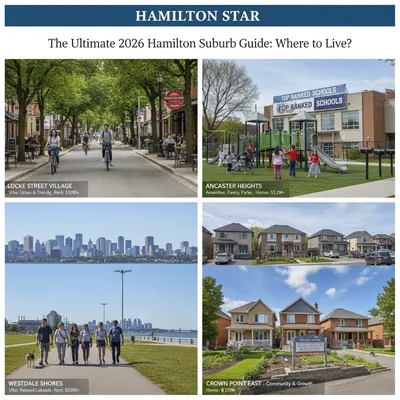
Local tip: if you are house-hunting with school enrolment in mind, it pays to use suburb boundaries as a starting point, then verify the school zone line street by street. Our wider suburb rundown is a useful companion read: The ultimate 2026 Hamilton suburb guide: where to live?.
Best intermediate and middle schools in Hamilton, pathways and what to look for
Hamilton has both intermediate (Years 7 to 8) and “middle” schooling options. The two big practical questions parents ask are: what is the learning and wellbeing support like for early adolescence, and what is the pathway into Year 9 and beyond.
Commonly considered intermediate and middle schools in Hamilton include:
- Berkley Normal Middle School (Years 7 to 10), Hillcrest area. A longer “middle school” model, which can suit families wanting continuity beyond Year 8. Check current zoning and enrolment scheme on Education Counts: https://www.educationcounts.govt.nz/find-school
- Fairfield Intermediate (Years 7 to 8), Fairfield. Often chosen by families on the east side. Verify in-zone status and any out-of-zone ballot dates.
- Peachgrove Intermediate (Years 7 to 8), Peachgrove area. A common option for families in Chartwell, Peachgrove and surrounds, depending on address.
- Maeroa Intermediate (Years 7 to 8), Maeroa. Considered by families in western suburbs, again depending on address.
- Rototuna Junior High School (Years 7 to 10), Rototuna. A key part of the Rototuna campus pathway and highly sought after in the north.
What to ask on a visit: how learning support is delivered, how they manage bullying and online issues, what extension opportunities exist, and what “feeder” relationships look like with nearby secondary schools. If your child is sporty or arts-focused, ask about lunchtime and after-school options and transport, not just elite teams.
Best secondary schools in Hamilton, co-curriculars, NCEA and reputation
Secondary choice tends to attract the most emotion, partly because it is tied to NCEA, university options, trades pathways and a young person’s identity. In Hamilton, school reputations are also heavily shaped by sport, culture groups, and old-school alumni narratives.
State secondary schools families frequently compare include:
- Hamilton Boys’ High School, Whitiora. One of the city’s best-known schools, with strong sport and cultural traditions. Check enrolment scheme and boarding/day options (if applicable) directly with the school and Education Counts.
- Hamilton Girls’ High School, Hamilton East. A long-established option with a wide subject range and co-curriculars. Confirm zoning and enrolment procedures early.
- Hillcrest High School, Hillcrest. Often sought after by families on the east and south-east, with a reputation for academic breadth and arts and sports pathways.
- Fraser High School, Melville. A large, diverse school serving the west and south. For many families, the deciding factor is the specific support programmes and the fit for their child.
- Fairfield College, Fairfield. Serves much of the east, families often ask about leadership opportunities and sporting codes.
- Mangakōtukutuku College, Hamilton. A newer secondary option that some families will be considering as the school grows and establishes longer-term results and traditions.
State-integrated and special character options commonly researched include:
- Sacred Heart Girls’ College (state-integrated Catholic). Attendance dues apply. Contact the school for current fees, preference criteria and enrolment timelines.
- Marian Catholic School (primary). Preference enrolments apply under the integrated system, and attendance dues may apply.
- Ngā Taiātea Wharekura (Māori-medium pathway). Families looking for te reo Māori immersion should engage early and visit the kura.
Private option frequently mentioned in Hamilton is Southwell School (independent, Years 1 to 13). Fees are significant compared with state schooling, and scholarship or assistance options vary by year. Contact the school directly for the latest fee schedule and application deadlines.
Reputation check, how to do it fairly: ask what the school does for students who are not “top of the class” or “top of the first XV”. Ask about attendance support, learning needs coordination, and how the school responds when things go wrong. A good reputation should include fairness and follow-through, not just trophies.
How to choose a Hamilton school, open days, ballots, donations and daily logistics
Once you have a shortlist, treat the process like due diligence. The practical questions often matter more than the marketing:
- Visit on an ordinary day, not just an open evening. Ask to see a normal class transition or interval.
- Confirm key dates: in-zone enrolments, out-of-zone ballots, orientation sessions.
- Budget for costs: state schools are free to attend, but many request donations and charge for stationery, camps and some activities. State-integrated schools also charge attendance dues.
- Plan the commute: before and after school traffic can be a decisive factor in Hamilton, especially across river bridges and main arterial routes.
- Ask about support: learning support, ESOL, gifted programmes, counselling, behaviour support and attendance follow-up.
Families new to Hamilton often underestimate how much school choice intersects with where you live, your work hours and after-school care. If you are also trying to build community connections, keep an eye on local council drop-in sessions and neighbourhood events that help you meet other parents. Our coverage: Hamilton Council launches community drop-in sessions.
And, if you want a low-pressure way to test how the city feels for your whānau on weekends, try heading out to larger community events in the wider Waikato. Even Cambridge’s summer food truck festival can be a good “trial run” for family logistics: Cambridge food truck festival returns for summer season.
Quick shortlist by suburb: which Hamilton areas families search first
Parents most commonly start with suburb-based questions: “What are the best schools in Rototuna?”, “What are the Hillcrest schools?”, “What’s the west side option?”, because they are trying to connect school runs to daily life. For broader school information, check out Brampton’s best schools: A 2026 guide.
While zones vary, the rough way families group options is:
- North and north-east (Rototuna, Flagstaff, Huntington): strong demand, newer facilities, zoning pressure, plus Rototuna campus pathway (primary through junior and senior high).
- East (Hillcrest, Hamilton East, Fairfield): a mix of established primaries and major secondary options, plus university proximity in parts of Hillcrest.
- Central and west (Frankton, Maeroa, Nawton, Dinsdale): broader mix of schools, often more choice within short distances, but zoning lines can be surprisingly specific.
- South (Melville, Glenview): large secondary and primary options, families often prioritise pastoral care, support programmes and transport.
Because house prices and availability shift, some families broaden the search beyond Hamilton City into nearby districts. If you are doing that, it can be helpful to read how other regions structure school choice, zoning and parent expectations. For comparison, see this Australian guide: The best schools in Esperance: A guide for parents.
Finally, remember the best school on paper is not always the best school for your child. A school that suits a confident self-starter may not suit a child who needs smaller steps, strong learning support, or a particular cultural environment. The “best” outcome is usually a child who feels safe, known and stretched.