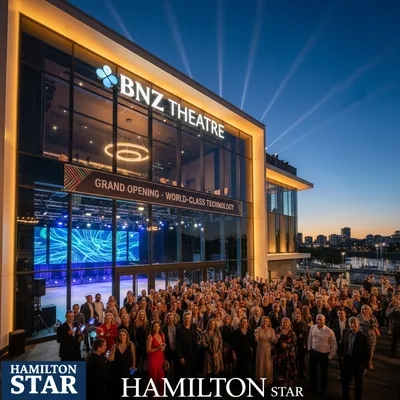
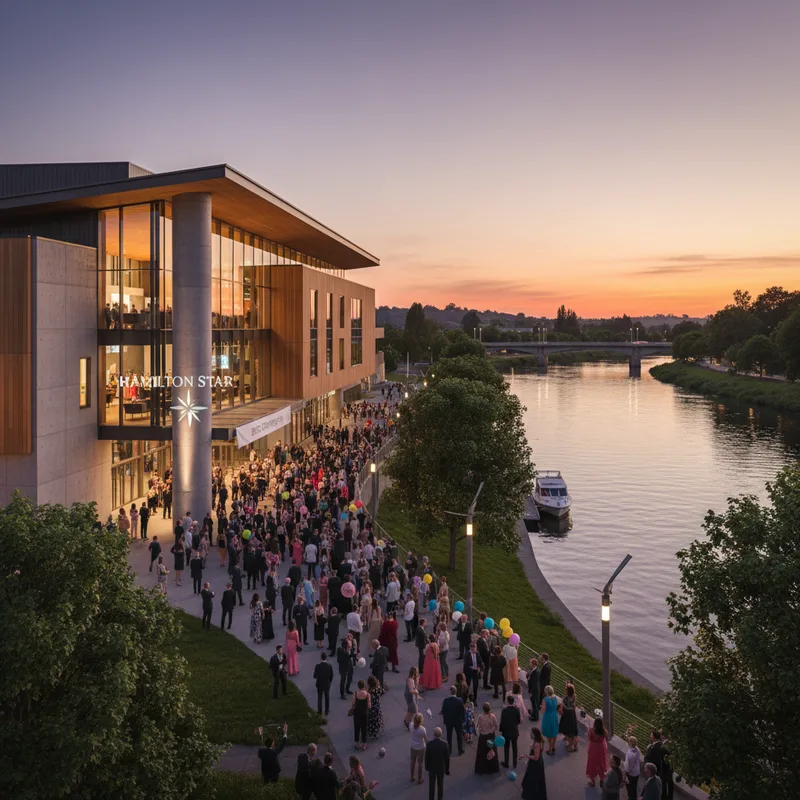
Hamilton has officially welcomed a new cultural centrepiece to its waterfront, with the opening of the BNZ Theatre in Kirikiriroa. The landmark project, a decade in the making, gives the city a world-class performance venue for the first time since the earthquake-damaged Founders Theatre closed its doors in 2016.
Designed by the multidisciplinary practice Jasmax with specialist consultancy from Charcoalblue, the 8,500-square-metre complex is built on the site of the former Hamilton Hotel, a 1923 Beaux Arts building. The project carefully preserves the historic street-facing facade while introducing a contemporary, glass-fronted structure that opens onto the Waikato River, aiming to be a catalyst for economic and cultural growth in New Zealand's fastest-growing city.
The closure of the Founders Theatre left a significant void in Hamilton's arts scene, forcing local and touring productions to seek alternative, often smaller, venues. The decade-long journey to replace it was fraught with challenges, including pandemic-related disruptions, funding hurdles, the complexities of working with a heritage site, and escalating material costs. The opening this month marks the culmination of a persistent community and civic effort to restore a major performing arts hub to the region.
A versatile stage for all performances
At the heart of the new building is a 1,300-seat auditorium designed for acoustic and spatial versatility. The project team engaged in extensive consultation with local arts organisations and community groups to ensure the venue could accommodate a wide array of performances, from the New Zealand Symphony Orchestra to local school productions and international rock concerts.
Erin Shepherd, a director at theatre consultancy Charcoalblue, says the goal was to create a space that could be finely tuned for each specific use. "Different theatre uses have different spatial and acoustic needs," Shepherd said. To achieve this, the auditorium is lined with timber and features a system of movable drapes that can alter the room's sound profile, either amplifying resonance for an orchestra or dampening it for amplified musicals and gigs.
The flexibility extends to the seating and stage. The stalls seating is mounted on movable wagons, allowing the area to be cleared for standing-room events. The forestage, the area in front of the main curtain, can be enlarged or reduced depending on the scale of the production. This level of adaptability ensures the theatre can cater to a diverse range of artistic and community needs.
Bridging heritage with modern design
The project's architectural vision involved a delicate balance between preserving a cherished piece of Hamilton's history and creating a modern, technically advanced facility. Jasmax, which handled the architecture, interiors, and landscaping, chose the Hamilton Hotel site after assessing 30 potential locations across the city.
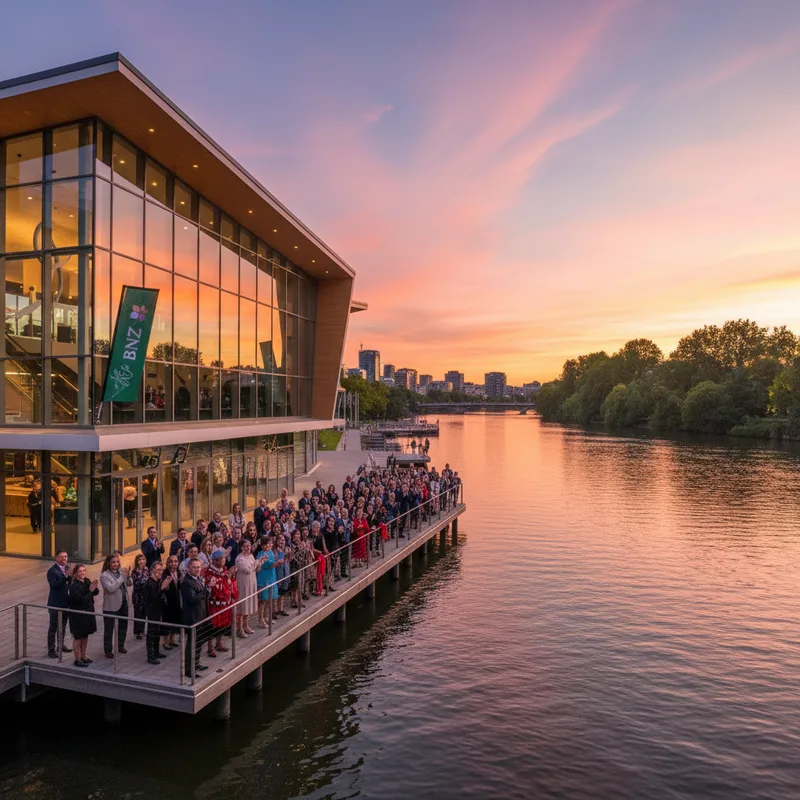
The solution was to reinforce the original 100-year-old facade with a new steel-beam structure while integrating historical interior elements, including a staircase from an apartment used by Queen Elizabeth during her Coronation tour. Behind this preserved heritage frontage, a new structure rises, clad in locally sourced Hinuera stone, a natural volcanic rock. This modern wing, with its expansive glass windows, faces the river and establishes a visual dialogue between the old and the new.
The key was recognising that heritage and innovation aren’t opposing forces; both are about creating enduring architecture that serves its community across generations.
"The key was recognising that heritage and innovation aren’t opposing forces; both are about creating enduring architecture that serves its community across generations," says David Pugh, Jasmax’s Project Principal. This philosophy is evident in the seamless integration of the two architectural styles, creating a building that feels both grounded in its history and forward-looking.
Reconnecting with the waikato river
A core objective of the BNZ Theatre project was to reorient Hamilton's civic and cultural life back towards its greatest natural asset, the Waikato River. For decades, the city's development had largely turned its back on the river, a trend this new venue actively reverses. The design intentionally connects the interior spaces with the river and its surrounding landscape.
"The connection to the Waikato River is fundamental to the entire design concept. The river is a taonga (treasure) of Waikato-Tainui and Ngāti Tūwharetoa, holding deep cultural, environmental and spiritual significance," Pugh explains. "For too long, Hamilton had turned away from its greatest natural and cultural asset. The BNZ Theatre reestablishes that connection."
This is achieved through a transparent, glass-walled foyer that offers sweeping views of the water, alongside a new riverside boardwalk and an outdoor public plaza. These elements are designed to make the theatre feel open and accessible, less like a formal institution and more a part of the city's daily life. It encourages informal use, from pedestrians strolling along the river to people gathering in the public spaces. As part of a wider revitalisation of the city's infrastructure, the theatre is a major step in embracing the waterfront.
A hub for local and international talent
Beyond its architectural merits, the theatre is built with practicality and artistic excellence in mind. To attract national and international touring companies, the design includes crucial back-of-house infrastructure, such as a turning circle large enough for the New Zealand Symphony Orchestra’s B-train trucks and a spacious, well-lit scene dock for assembling sets and equipment.
At the same time, the design serves the grassroots arts community. Consultations with local groups led to the inclusion of a generous back-of-house area capable of accommodating hundreds of children for large-scale school and dance shows. Spaces for buskers and informal performances have also been integrated into the foyers and public zones, creating a vibrant atmosphere throughout the building.
After a long and complex journey, the BNZ Theatre has opened its doors, ready to host everything from local emerging performers to seasoned international acts. "We’re most proud that the theatre delivers on its promise to serve multiple communities and purposes," Pugh says. "It operates at the highest international standards while remaining deeply rooted in its place and accessible to local productions, youth theatre and emerging Waikato performers."