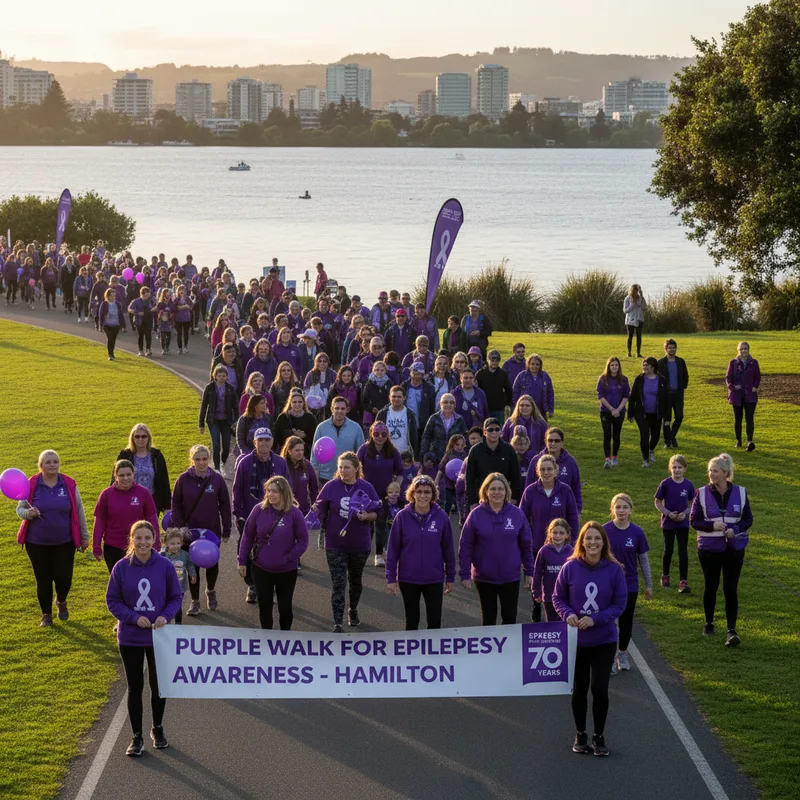
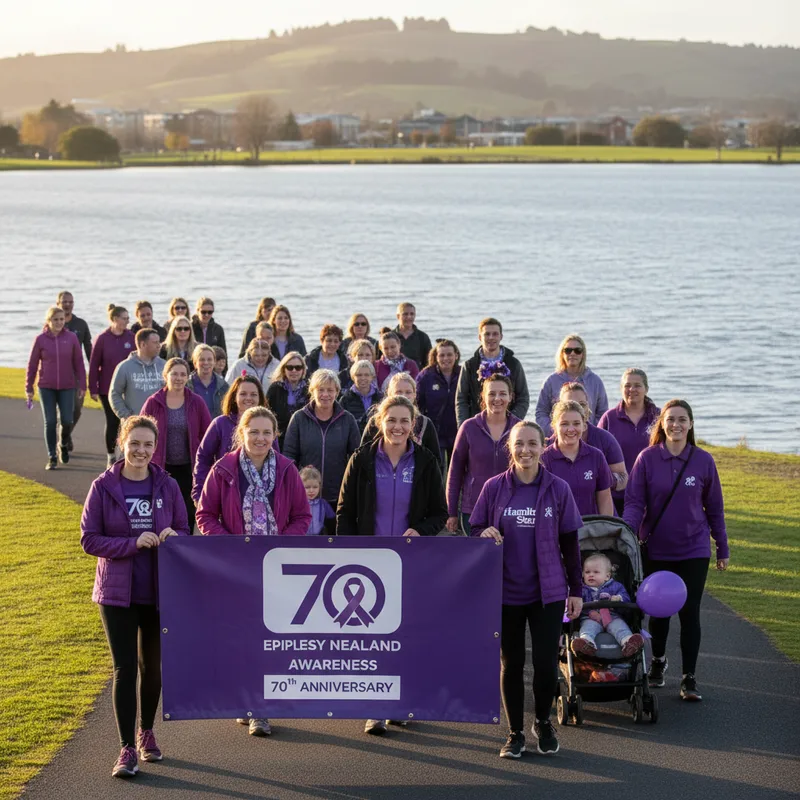
Hamilton is set to be awash in a sea of purple as residents gather for the Purple Walk for Epilepsy on Sunday, 29 March 2026. The free, family-friendly event invites the community to walk around Hamilton Lake to show support for Kiwis living with epilepsy, celebrate Purple Day, and mark the 70th anniversary of Epilepsy New Zealand.
The walk will kick off at 9:30 am from Innes Common on Lake Domain Drive. Participants are encouraged to wear their brightest purple outfits to create a vibrant display of solidarity. The event is open to all ages, and residents are welcome to bring along the whole whānau, including their friendly, leashed dogs.
While the primary purpose is to raise awareness, the day is designed to be a feel-good celebration of community. There will be spot prizes for those showing exceptional purple spirit, a live singing performance at the finish line, and a sausage sizzle available from 10:30 am for a post-walk snack.
A milestone of support and advocacy
The event holds special significance as it coincides with the 70th anniversary of Epilepsy New Zealand. Founded in 1956, the organisation has been the leading provider of support, information, and advocacy for people with epilepsy and their families across the country for seven decades. This walk is not just a fundraiser but a celebration of the resilience of the community it serves and the enduring work of the organisation.
Epilepsy is one of the most common neurological conditions globally and in New Zealand, affecting more than 50,000 people. It is characterised by recurring seizures, which are sudden bursts of electrical activity in the brain. These can manifest in various ways, from brief lapses in attention to full-body convulsions.
Despite its prevalence, epilepsy is often misunderstood, and those living with the condition can face significant social stigma and discrimination. To help combat this, Epilepsy New Zealand educators from the Waikato and Auckland regions will be present at the walk. They will be available to connect with individuals and whānau, offering valuable information, answering questions, and providing a direct link to the support services the organisation offers.
The global meaning of purple
The walk is timed to align with International Purple Day, which falls on 26 March. This global grassroots movement was founded in 2008 by nine-year-old Cassidy Megan of Nova Scotia, Canada. Motivated by her own experiences with epilepsy, she wanted to get people talking about the condition to dispel myths and let individuals know they are not alone. The colour lavender, a shade of purple, is associated with epilepsy and represents solitude, reflecting the feelings of isolation many with the condition experience.
Wearing purple has since become a powerful international symbol of epilepsy awareness. Communities worldwide now hold events on or around this day to bring attention to the cause. The Hamilton walk is part of this global effort, connecting the local community with a worldwide movement of support and understanding. These events are crucial in creating a more inclusive society where people with epilepsy feel safe and supported.
For those looking for more community activities, Hamilton offers a wide variety of options, from markets to festivals, many of which can be found in local guides to fun things to do in the city.
How to participate and contribute
Participation in the Purple Walk For Epilepsy is simple: no registration is required, and entry is completely free. Attendees are encouraged to simply show up at Innes Common before the 9:30 am start time. While the event is free, koha (donations) are warmly welcomed on the day to support the ongoing work of Epilepsy New Zealand.
For those who wish to contribute more formally, fundraising is encouraged. Supporters can donate directly via the Epilepsy New Zealand website or start their own online fundraising page through Givealittle. All funds raised go towards providing vital services, including a national network of educators, support groups, public awareness campaigns, and advocacy for improved health services and social outcomes.
The sense of community spirit is a vital part of life in the Waikato, with events like this often bringing people together for a common cause, much like the recent community effort that saw a Hamilton centre give elders a second chance at prom.
Organisers are encouraging everyone to share the event details with friends, family, and social networks to ensure a strong turnout. The official Facebook event page is available for sharing updates and connecting with other participants ahead of the walk.
By coming together, the Hamilton community can take a literal step towards greater understanding and help brighten the lives of the thousands of New Zealanders affected by epilepsy.