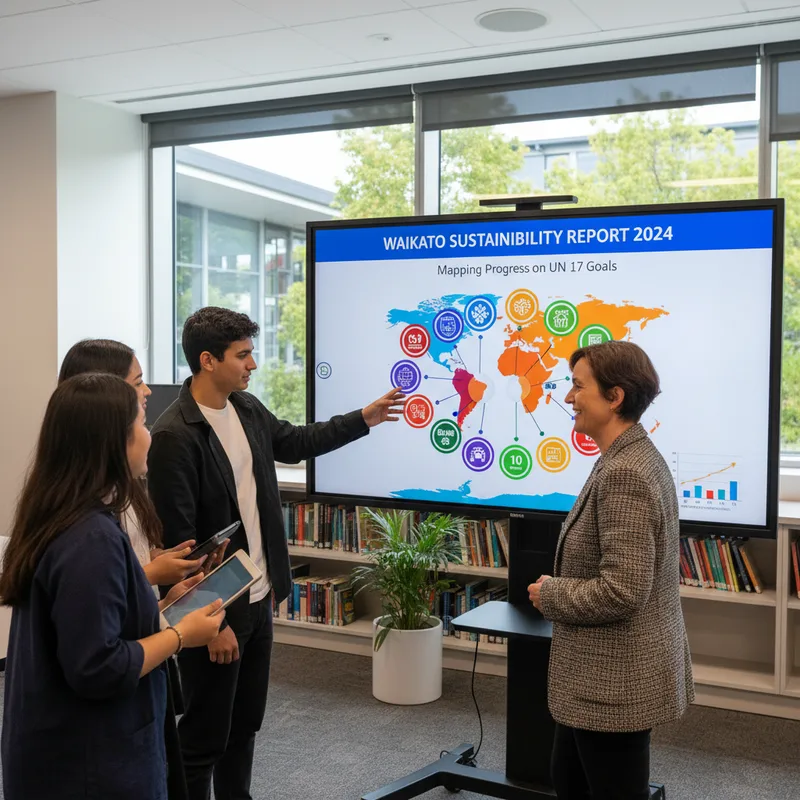
The University of Waikato says its latest sustainability report tracks a year of work tied to all 17 UN goals.
The 2024 report, titled Whaioranga Taiao, Whaioranga Tangata, sets out projects that range from climate research to health equity and sustainable trade.
What is in the university of waikato sustainability report 2024?
The university describes the document as “a record and a celebration” of work across campus and partner communities.
It says the report “showcases the progress we made towards the 17 United Nations’ Sustainable Development Goals (SDGs) in the calendar year”.
The Māori title signals a two-part ambition. The university says the name “reflects our aspiration for both a healthy and connected environment and fair and inclusive communities”.
It also sets out a linking idea behind the programme. The university says the title acknowledges “that neither can exist without each other”.
For readers wanting to check the underlying global framework, the UN lists the full set of Sustainable Development Goals and targets on its official site under the Sustainable Development Goals programme.
Why the report links environment and equity
The report’s framing puts environmental outcomes and social outcomes in the same basket. That matters for a regional university that trains teachers, nurses, scientists, planners and business graduates.
In practical terms, the work described spans community-based projects and research programmes. The university positions it as a single stream of effort rather than separate “green” and “people” initiatives.
The report’s language is also a signal to prospective students and partners about priorities. It sets expectations for how projects are chosen, how they are evaluated, and which communities should benefit.
That focus comes as Hamilton hosts a run of public events that draw visitors into the CBD and river precinct. The university’s campus sits a short drive from Garden Place, where the Chinese Lantern Festival is scheduled for February 28.
What sustainability research stories waikato is highlighting
Alongside the main report, the university has published a set of “sustainability stories” that point readers to specific areas of work.
One story focuses on Antarctic science and climate systems. The university says researchers are “using the language of science to reveal the critical role that Antarctica plays in shaping our climate”.
Another story centres on planning for climate hazards. The university says “climate change impacts all facets of the way society interacts with the environment, especially how and when to use space and resources wisely”.
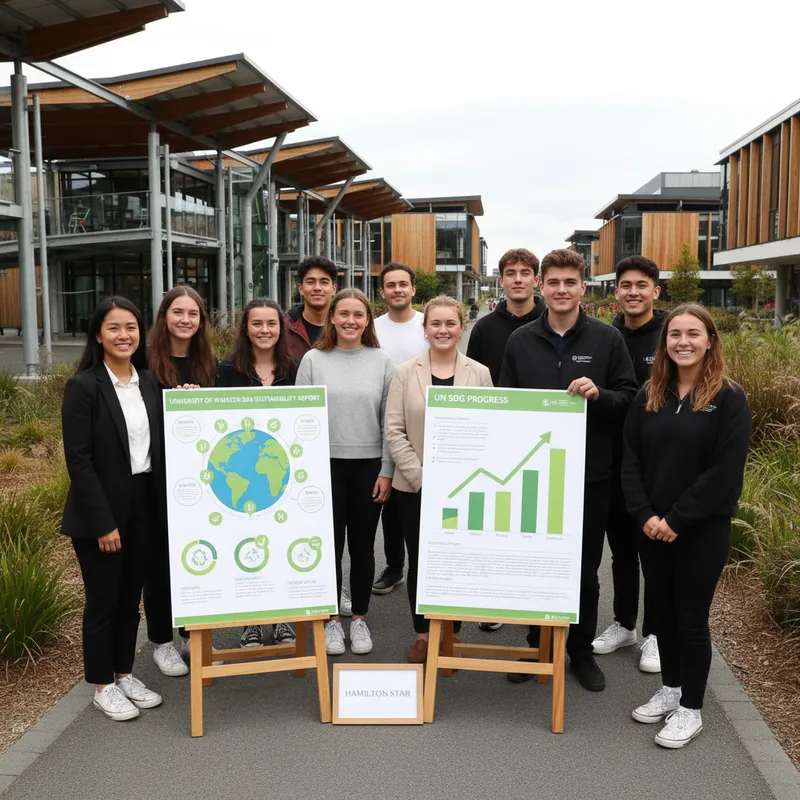
The research list also includes sustainable innovation. The university says it is “at the forefront of creating transformation that serves people, businesses and the environment”.
Health equity features as well, with a story on healthcare access. The university says chronic conditions have increased pressure on health systems and “further exacerbating inequities”.
Marine and freshwater work is included. The university says it is “committed to protecting and restoring the health of our oceans and coastlines”.
The final highlighted stream is trade. The university says the world faces “deeply interconnected challenges that pit profit against our planet”.
“Our world is facing a range of deeply interconnected challenges that pit profit against our planet,” the University of Waikato says.
Our world is facing a range of deeply interconnected challenges that pit profit against our planet.
Those story headings mirror where many employers now ask graduates to show capability. That includes climate adaptation, data analysis, community engagement, and te ao Māori-informed approaches.
How students and the community can use the report
The university has made the report available for download as a 1.6MB PDF from its governance and reporting pages.
For students, the document provides a snapshot of the kinds of research and community partnerships running during the calendar year. It can also help postgraduate candidates identify supervisors and topic areas.
Community groups can use it to see which teams already work in areas like hazards, water quality, and health access. For councils, it can help map who is generating local evidence when new plans and budgets are developed.
Schools and whānau weighing study options often look for signals about values and real-world impact. The sustainability report sits alongside broader recruitment news, including the university’s update that its “student cohort continues to grow” in 2026.
The report’s themes also intersect with events that pull research into the public eye. Hamilton’s annual Balloons over Waikato programme typically brings STEM outreach and community activities into the city from March 21.
Where to find the report and earlier editions
The university has also kept previous sustainability reports online, with editions listed for 2021, 2022 and 2023.
That archive allows readers to track how priorities have shifted across years. It also provides context for which projects were sustained, expanded or replaced.
The University of Waikato says Whaioranga Taiao, Whaioranga Tangata is “a record and a celebration of our interconnected work at the University of Waikato to build inclusive and equitable communities, and a thriving and healthy environment”.
The university’s sustainability reporting page includes direct links to the 2024 PDF and the earlier reports for download.
The 2024 Whaioranga Taiao, Whaioranga Tangata report is available now from the university’s website.