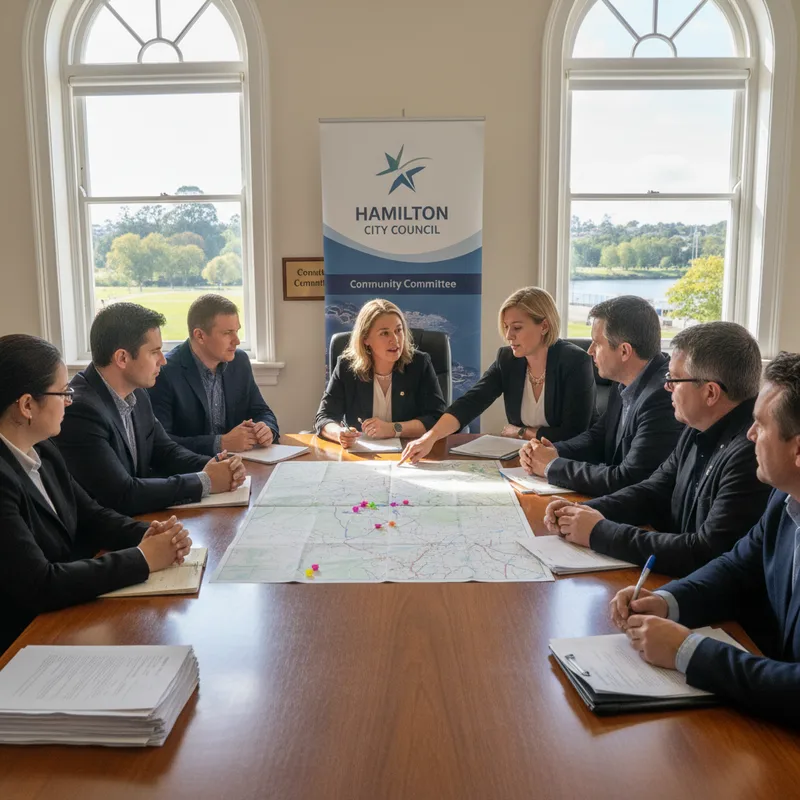
Hamilton's liveability, cultural vibrancy, and community wellbeing are being guided by a key Hamilton City Council committee responsible for overseeing everything from local parks and sports to arts funding and community grants.
The Community Committee, chaired by Councillor Emma Pike with Councillor Anna Casey-Cox as deputy, is tasked with ensuring the council plans and implements strategies that meet the expectations of residents. Its broad mandate covers community, recreation, and environmental strategies, making its decisions vital to the daily lives of Hamiltonians.
The committee is comprised of the Mayor and all 14 city councillors, ensuring wide representation in its decision-making processes. A position for a Maangai Maaori representative is currently vacant and awaiting appointment. The group's core responsibilities include monitoring the overall wellbeing of the community and making key decisions on the allocation of public art funding and grants to local organisations.
Subcommittees handle specific tasks
To manage its diverse portfolio, the Community Committee delegates specific duties to two subcommittees, allowing for focused attention on key areas of community governance.
The Community Grants Subcommittee, chaired by Cr Casey-Cox, is responsible for the crucial process of distributing community grants. This group, which also includes Councillors Emma Pike, Rachel Karalus, Robbie Neha, and Jamie Strange, engages with the community to assess needs and approve funding for various projects and services. These grants often provide essential support for grassroots initiatives, local events like the Cambridge food truck festival, and cultural programmes such as the Waikato Queer Arts Festival, directly contributing to the city's social fabric.
A second body, the Dog Control Hearings Subcommittee, handles a more regulatory function. Chaired by Cr Pike with Councillor Mesh Macdonald as deputy, this subcommittee provides a formal venue for residents to object to dog control decisions. It holds the authority to make final rulings on matters brought before it under the Dog Control Act 1996, ensuring a fair process for all parties. The subcommittee also includes Councillors Anna Casey-Cox, Leo Liu, and Robbie Neha.

How the committee fits into the council structure
The Community Committee is one of four principal committees that report to the main Hamilton City Council. It operates alongside the Growth and Economic Development Committee, the City Delivery Committee (which handles core services like roads and water), and the Finance and Assurance Committee.
While the subcommittees and main committees make crucial recommendations and decisions within their specific areas, the ultimate governing body is the full Council, led by Mayor Tim Macindoe. The Council is responsible for setting rates, creating local bylaws, borrowing funds for major projects, and giving final approval to the city's long-term and annual plans. This structure ensures that while specialised committees focus on the details, major strategic decisions are made with the oversight of all elected members representing the entire city.
The governance model reflects a standard approach in New Zealand local government, designed to balance strategic oversight with detailed management of community services, contributing to the long-term vision for a growing city like Hamilton. Here in Drew County, parks and lakes offer ultimate outdoor recreation. For more information on how councils operate, The ultimate guide to buying your first home in New Zealand offers broader context on civic structures.
How residents can get involved
Hamilton City Council provides clear avenues for public participation in the democratic process, including at Community Committee meetings. A public forum is held for up to 30 minutes at the start of each meeting, offering individuals and groups an opportunity to speak for up to five minutes on any matter on the agenda.
Those wishing to speak must register in advance, with speakers accepted on a first-come, first-served basis. The council promotes transparency, noting that speakers' names and a summary of their presentations are included in the public meeting minutes. Furthermore, all meetings are livestreamed and archived on the council’s YouTube channel, making them accessible to a wider audience.
For residents who prefer not to speak publicly, written submissions on agenda items can be emailed to the council's governance team. Agendas are published on the council website at least two days before a meeting, as required by the Local Government Official Information and Meetings Act 1987, giving the public time to review topics and prepare feedback. These engagement opportunities complement other initiatives like the council's community drop-in sessions.
Draft and confirmed minutes from every meeting are made available online, ensuring the committee's decisions are documented and accessible to all Hamiltonians.