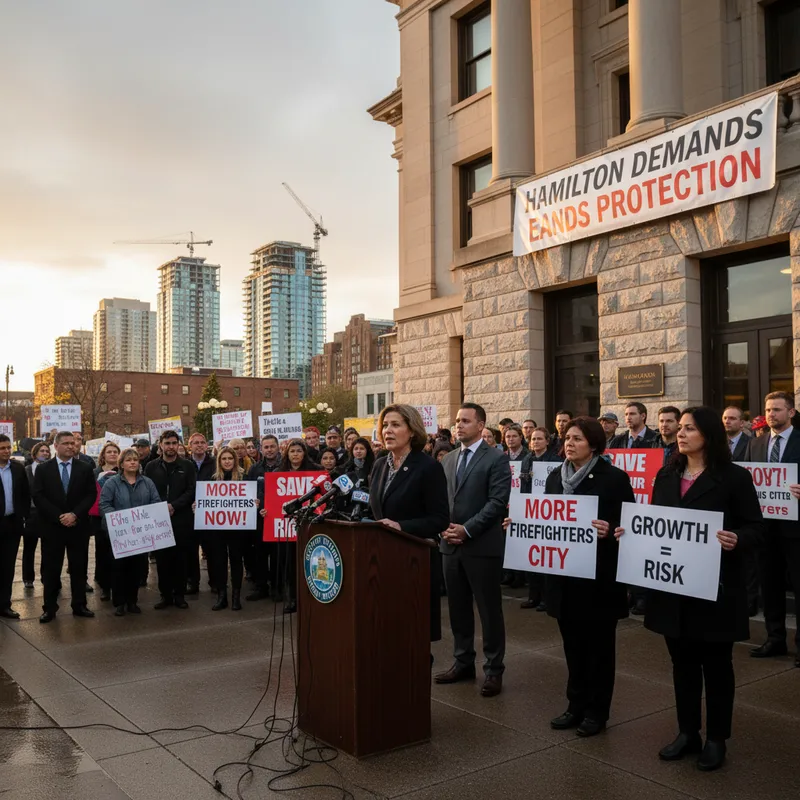
Hamilton's mayor and councillors are vowing to "bang the drum" for increased emergency services funding, warning the city's firefighting capacity is at a breaking point due to rapid population growth.
During a recent council meeting, several councillors voiced frustration over what they see as years of inaction from central government, highlighting that Hamilton's fire crews are stretched to their limit. The city's growth, with its population approaching 200,000, and the expansion of residential and industrial areas are leading to increased callouts and straining response times.
Long-serving councillor Angela O'Leary stated the council has been "quietly lobbying" for six to ten years about the "desperate need" for more resources. She argued it is time for a more aggressive approach.
"It is time for us. to become the squeaky wheel, quite frankly," O'Leary said. "We need to get on a plane, we need to go down to Wellington, and we need to be a flea in somebody's ear because we have had Fire and Emergency, turning up, and telling us for many years, that we are at a critical point."
Councillors unite on 'critical' issue
The sentiment was shared across the council chambers. Councillor Sarah Thomson stressed the need for a unified voice. "We need to be strong voice to ensure that our residents, when there is an emergency, can rely on the fact that there will be a quick response," she said.
Councillors Graeme Mead and Sue Moroney described the situation as having reached a "critical point" and being "not acceptable," both endorsing a more forceful lobbying strategy in Wellington.
Mayor Tim Macindoe, who took office after the 2025 local elections, pledged to lead the charge. Leveraging his extensive experience as a former Member of Parliament for Hamilton West and a government minister, Macindoe said he is ready to take the city's case directly to his former colleagues in the Beehive.
"I absolutely accept my role as mayor should be showing a leading position on this, and I will be happily getting on any plane to go into any minister's office to bang the drum for our city," Macindoe stated. "We need that extra capacity." This advocacy follows other significant council financial decisions this year.
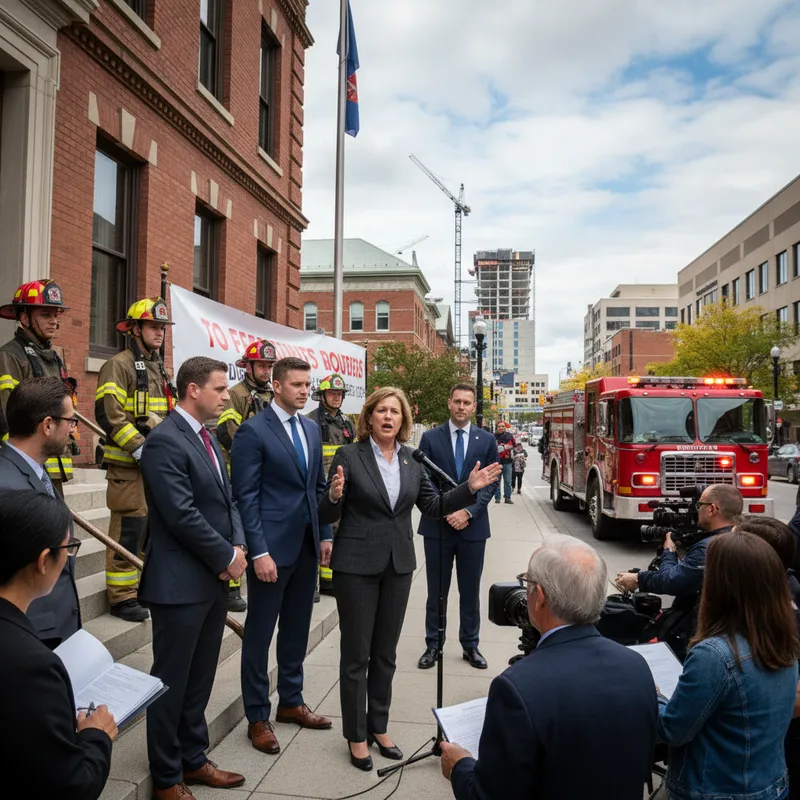
Union warns city is two stations short
The council's renewed urgency follows a stark warning from Jay Culhane, local secretary for the NZ Professional Firefighters Union. He told a recent council committee that Hamilton is at least one, and possibly two, fire stations short of what is needed to adequately serve its growing population.
Culhane explained that current staffing levels are causing delayed responses to emergencies and forcing an over-reliance on volunteer brigades from surrounding areas. This pressure on volunteers, who also have their own communities to protect, is not a sustainable solution for a major urban centre. Increased demand on services is seen across the board, from fire to medical responses, though the city's capacity was recently improved with a new ambulance.
Hamilton is one of New Zealand’s fastest growing cities. That growth is well understood and planned for across transport, housing, and infrastructure. However, emergency response capability has not kept pace at the same rate. This is not a new issue. A Strategic Network Plan developed over a decade ago identified the need for a four-station model to support Hamilton’s growth.. Those pressures are now being experienced in real time.
Growth pressures and official responses
Hamilton’s considerable growth has been a key factor in the city's development strategy for years. Macindoe himself, during his time as an MP, was instrumental in securing a significant share of the national Housing Infrastructure Fund to facilitate the large-scale Peacocke development, a project essential for accommodating the city's expansion. This rapid development, however, has not been matched by investment in core emergency services infrastructure from central government, a situation mirrored in Casey Council’s demands for action on its own transport crisis.
The issue of under-resourced civic services is a challenge faced by cities globally, with some, like San Diego, even proposing cuts to safety teams amid budget constraints.
Responding to the concerns, Fire and Emergency New Zealand (FENZ) Deputy National Commander Megan Stiffler pushed back against claims that planning for Hamilton's future needs has stalled. "Fire and Emergency New Zealand recognises the importance of our Future Operating Capability work and it remains a priority. It is not stalled," she said.
Stiffler also defended the current operational model, as detailed on the official FENZ website. "The use of both career and volunteer firefighters is a fundamental part of our operating model," she noted, acknowledging the organisation is "mindful of the impact this can have on volunteer availability."
Despite these assurances, Hamilton’s elected officials are now committed to forcing the issue. The cross-party consensus on the council floor signals a significant shift in strategy, moving from private discussions to a public campaign aimed squarely at lawmakers in Wellington. Mayor Macindoe's promise to personally champion the cause marks a new chapter in the city's fight for resources he and others believe are long overdue.