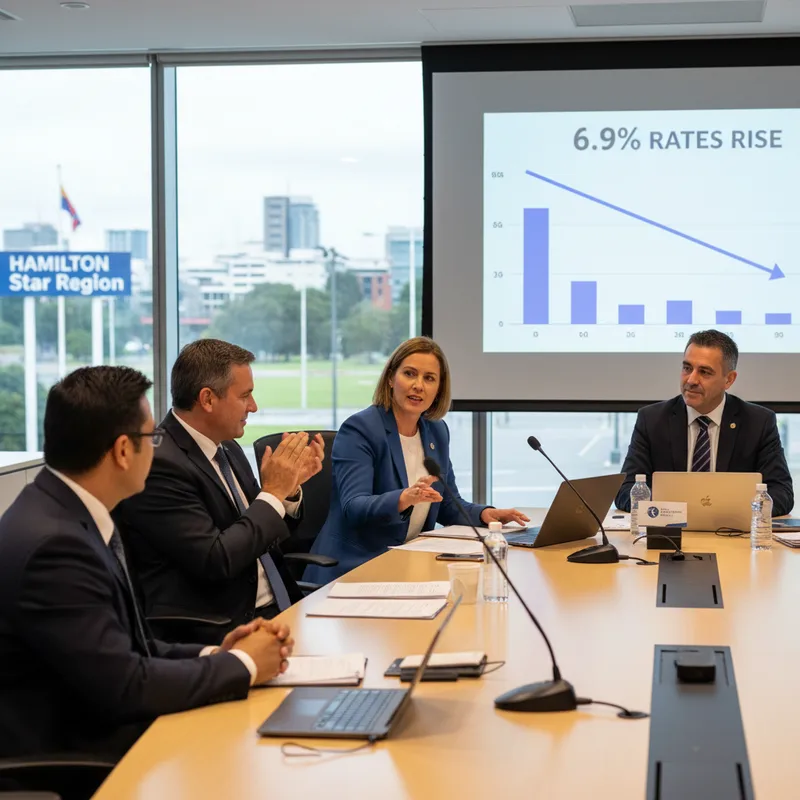
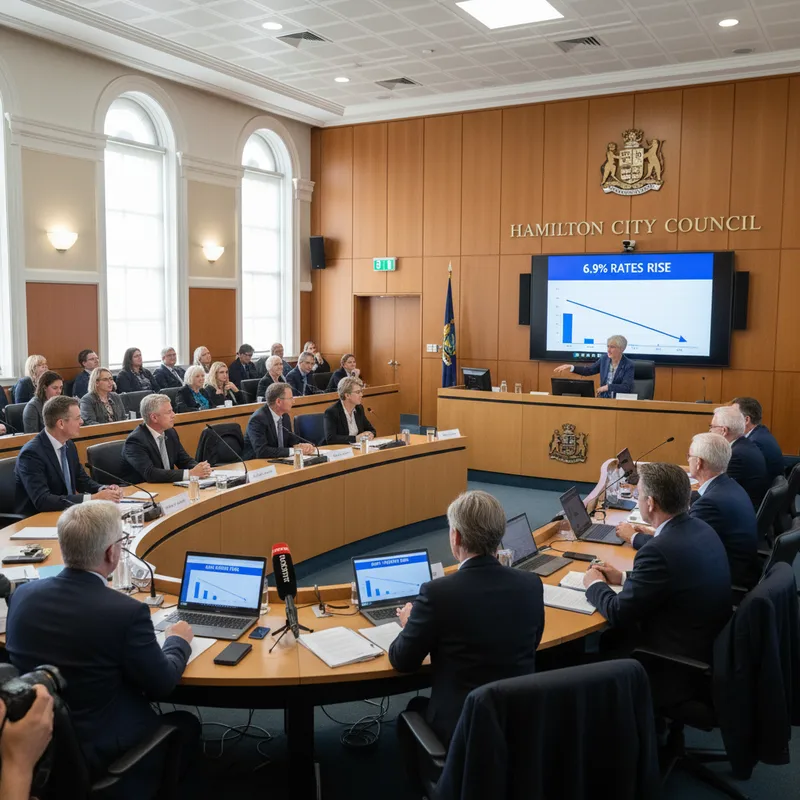
Hamilton households will see a smaller-than-expected increase in their rates bills next year after the Hamilton City Council formally adopted its 2026-2027 Draft Annual Plan. The plan confirms an average rates rise of 6.9 per cent for existing ratepayers, a significant reduction from the 10.4 per cent increase that was initially signalled.
For a residential property with a median capital value of $720,000, the new rate means an annual increase of approximately $196. This is nearly $100 less than the $295 increase residents would have faced under the earlier proposal. The decision comes as a relief to many households grappling with rising living costs, a sentiment the council says it has heard loud and clear.
Mayor Tim Macindoe said the council responded to a “clear mandate” from the community to lower costs. He said this was achieved through a combination of stronger-than-expected financial results and deliberate measures to tighten the council’s internal spending. The move aims to strike a balance between fiscal responsibility and maintaining the essential services required for a rapidly growing city.
The council has managed to maintain its current service levels despite the budget trimming, a feat credited to a multi-pronged strategy of finding efficiencies across the organisation. According to the council, these savings did not happen by chance but were the result of a concerted effort to run a leaner operation.
How the council cut costs
The reduction in the planned rates hike was achieved without cutting services by targeting several key areas of council expenditure. Officials pointed to a significant reduction in the use of external consultants, a move that often draws public scrutiny for its high cost. Improved procurement processes have also generated savings, ensuring the council gets better value for money on goods and services.
Internally, the council has implemented tighter management of staff vacancies, choosing not to fill every position that becomes available and thereby reducing its payroll costs. This has been complemented by a push to enhance efficiency through new digital services, streamlining processes and reducing the need for manual intervention. This investment in technology aligns with other modern initiatives seen across the city, such as the new high-tech facilities at the BNZ Theatre.
Finally, the council has delayed some projects to free up funds. While specific projects were not detailed, this strategy allows the council to prioritise immediate needs while pushing back non-essential works. Mayor Macindoe rejected any suggestion that this approach simply defers costs to a later date. “Staying disciplined will help mitigate the effects of external pressures that can’t always be predicted,” he said.
A stronger financial footing
Hamilton City Council’s chief financial officer, Gary Connolly, said the lower increase was possible due to a financial position that has been steadily improving over the last three years. “The draft Annual Plan reflects disciplined budgeting and steadily improved performance,” he stated, noting that fiscal prudence has placed the city in a more resilient position.
A critical element of this strategy, according to Connolly, is the council’s move to stop borrowing to pay for its day-to-day operational costs. This is a significant shift in financial management. By funding daily expenses from its direct revenue, the council avoids accumulating debt for ongoing services and reduces its exposure to volatile interest rate changes. This practice is considered a cornerstone of sound financial management in local government, as detailed by organisations like Local Government New Zealand.
By not using debt for operating expenditure, we’re not passing today’s costs on to future ratepayers.
Connolly also addressed changes to how the council funds the depreciation of its stormwater infrastructure. He explained that adjustments were made to reflect the very long lifespan of these assets, arguing it was a logical financial move rather than a way to avoid costs. "Depreciation has been adjusted for stormwater assets with very long lifespans, where there is no cash funding requirement in the foreseeable future," he said. The full approach to funding asset renewals will be revisited during the development of the next Long-Term Plan for 2027-2037.
Hard decisions still on the horizon
While the lower rates increase has been welcomed, Mayor Macindoe acknowledged that significant challenges remain. He noted that the cost of infrastructure and servicing the city’s debt are ongoing pressures that will require "hard decisions" in the future. These larger strategic choices about growth and investment priorities will be at the heart of the next Long-Term Plan.
The tension between investing in new infrastructure for a growing population and keeping rates affordable is a common challenge for metropolitan centres across New Zealand, as seen in major undertakings like the Auckland busway project.
Early feedback from Hamilton residents has been positive, especially regarding the rates outcome and other community-focused initiatives within the plan. Notably, the draft plan also includes the planned return of two hours’ free parking in the CBD, a popular proposal aimed at encouraging more visitors and shoppers into the city centre. A similar initiative was part of a package of proposals discussed by the council, which also included free visits to the Hamilton Gardens.
Looking ahead, the mayor said the council’s definition of success is clear. It centres on keeping rates manageable for residents while continuing to provide the services and amenities expected of a modern, growing metropolitan city.