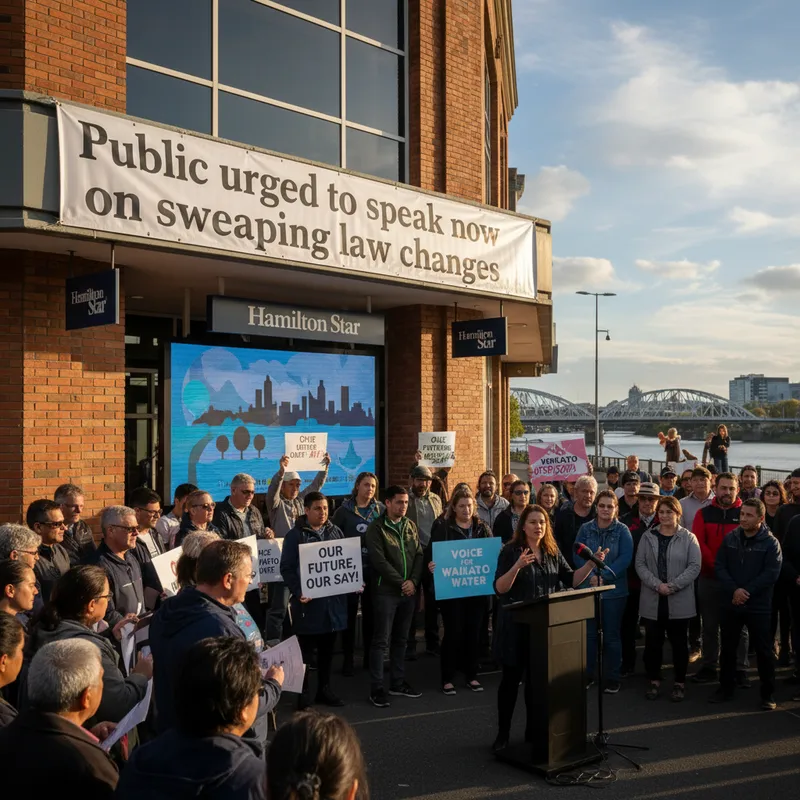
Hamiltonians are being urged to engage with a series of major government reforms that will fundamentally reshape the region's environmental laws, local governance, and water infrastructure for decades to come.
Legal experts are describing the current legislative overhaul as a 'speak now or forever hold your submission' moment, emphasising that the window for public input on these transformative bills is limited. The reforms, which cover resource management, the future of local government, and the management of water services, are set to have a profound impact on property owners, businesses, iwi, and every resident in the Waikato.
The government is currently advancing the most significant review of these sectors in over 30 years. It represents a a critical juncture for the public to influence the final shape of laws that will govern how Hamilton grows, how its essential services are managed, and how the environment, including the iconic Waikato River, is protected.
While the process of making a submission can seem daunting, it is a cornerstone of New Zealand's democratic process, allowing individuals and organisations to provide direct feedback to the select committees responsible for scrutinising and recommending changes to draft legislation.
A 'once in a generation' opportunity
At the heart of the government's agenda is the repeal of the nearly 900-page Resource Management Act 1991 (RMA). The RMA, long criticised for being cumbersome, costly, and slow, is being replaced by a suite of three new laws: the Natural and Built Environments Act (NBEA), the Strategic Planning Act (SPA), and the Climate Adaptation Act (CAA). The NBEA will be the primary piece of replacement legislation, setting out rules for land use and environmental regulation. The SPA will introduce a long-term, strategic approach to planning, requiring regional planning committees to develop 30-year-plus spatial strategies. This is intended to better integrate planning for housing, infrastructure, and climate change responses, a crucial factor for a rapidly growing city like Hamilton which is battling a tough economic climate ahead of major projects. Similar issues have surfaced in Auckland, where Luxon and Brown sign 'landmark' Auckland City Deal.
The third bill, the Climate Adaptation Act, will address the complex legal and technical issues involved in managed retreat and funding for communities facing unavoidable climate change impacts, such as sea-level rise and flooding.
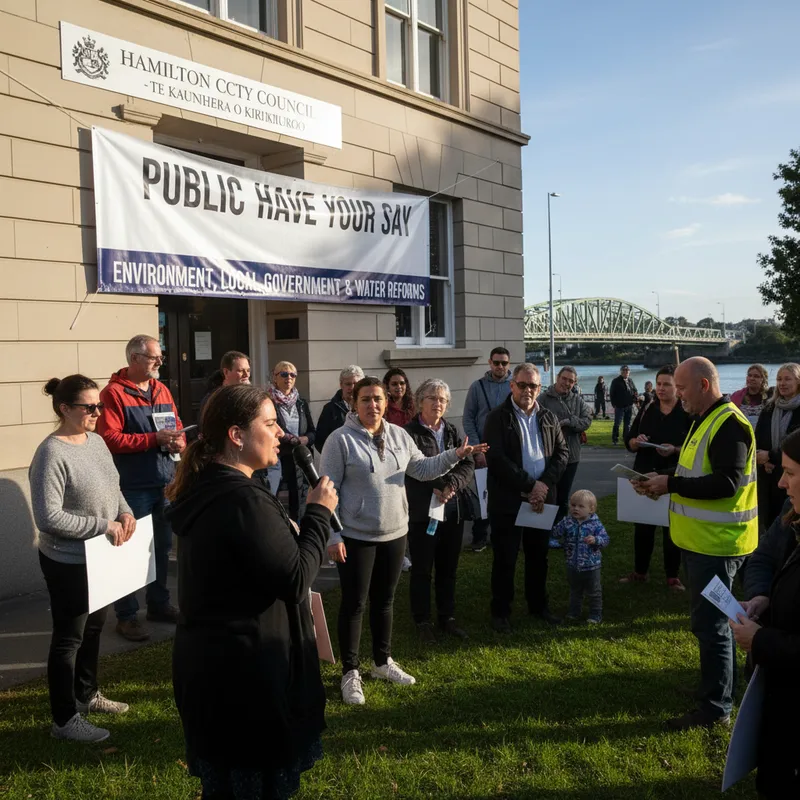
For Hamilton and the wider Waikato, these changes will dictate the future of urban development, the protection of prime agricultural land, and how major infrastructure projects are consented. The reforms aim to reduce complexity and cost, but the details contained within the new bills will determine the real-world outcomes for generations.
Sweeping changes for councils and water services
Alongside the resource management overhaul, two other major reforms are proceeding. The 'Future for Local Government' review is examining the roles, functions, and funding of city and district councils. The review's findings could lead to significant shifts in how Hamilton City Council operates, delivers services, and represents its community.
Perhaps the most contentious reform is the 'Three Waters' proposal. This would see the management of drinking water, wastewater, and stormwater assets transferred from 67 local councils to four new, large-scale, publicly-owned entities. For Hamilton, this would mean its extensive water infrastructure would be managed by the new 'Entity B', which is proposed to cover councils from the Waikato and Bay of Plenty down to Taranaki and the top of the South Island.
The government's stated goal for the Three Waters reform is to ensure safer, more reliable, and more affordable water services for all New Zealanders, addressing decades of underinvestment in some regions. The plan was largely prompted by the 2016 Havelock North campylobacteriosis outbreak, which resulted in thousands of illnesses and was linked to several deaths, highlighting critical failures in drinking water safety. However, the proposals have faced strong opposition from some councils and communities concerned about the loss of local control and ownership of assets. The upgrade of water networks for major local events like Fieldays at Mystery Creek highlights the ongoing investment required in this area.
How your voice can shape the future
Legal firms across the city, including Hamilton-based Tompkins Wake, Foley Douglas, and Lewis Lawyers, are highlighting that submissions are not just for lawyers and lobbyists. Any individual, business, or community group with an interest in the outcomes can, and should, participate.
A submission can be as simple as a letter or email outlining your views, concerns, or support for aspects of a bill. You can provide specific suggestions for changes or share real-world examples of how the proposed laws might affect you or your community. These submissions are carefully considered by MPs on select committees, and they often lead to significant amendments being made to legislation before it is passed into law.
This process is a vital feedback loop between the public and lawmakers. Without robust public engagement, Parliament risks passing laws that have unintended consequences or fail to reflect the needs and aspirations of the communities they are meant to serve. Detailed information on how to prepare and lodge a submission is available on the New Zealand Parliament website.
As the government forges ahead with its ambitious reform agenda, the message from those in the know is clear: the time to read up, speak up, and make a submission is now. These changes will have lasting effects on life in Hamilton and across the country, making public involvement more important than ever.