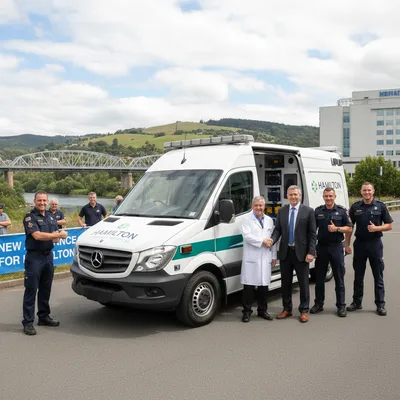
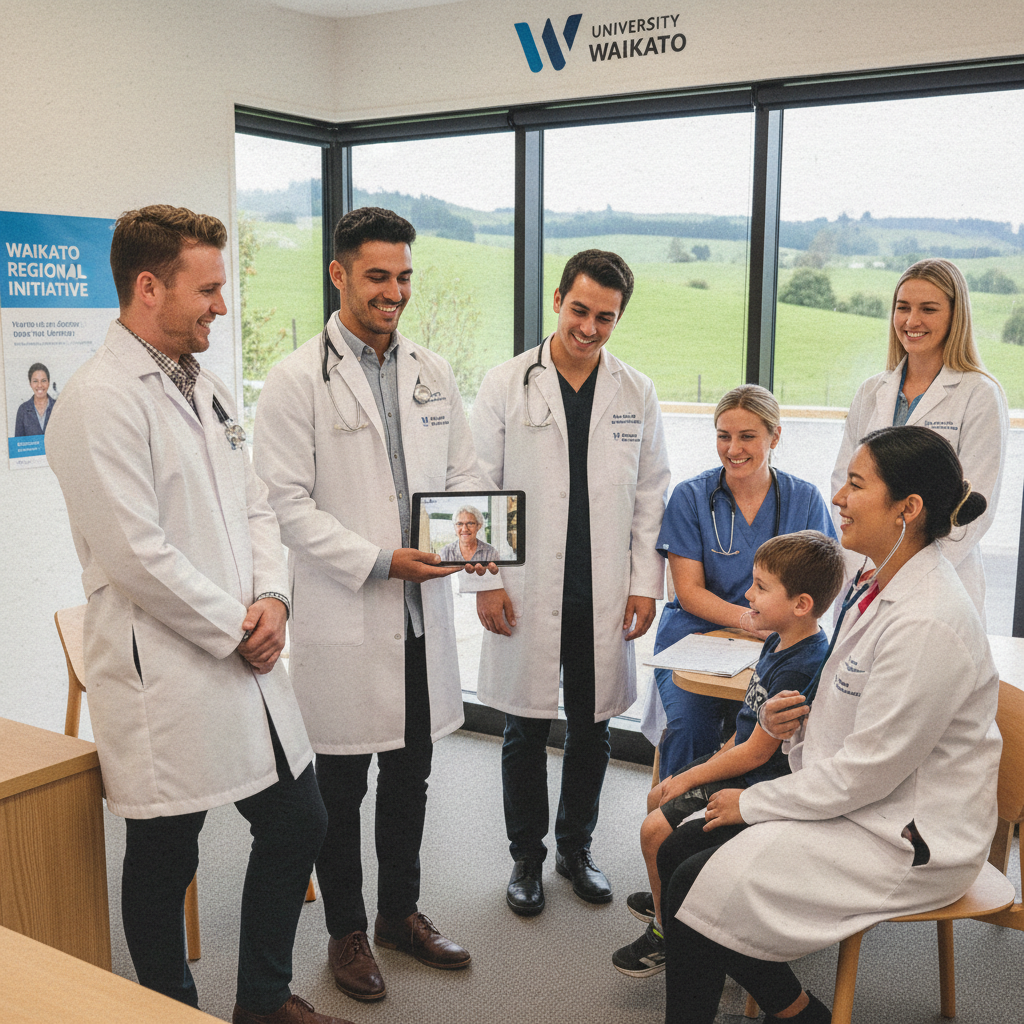
A new graduate-entry medical degree that places students in regional and rural communities for the majority of their training is being hailed as a vital step towards solving New Zealand’s chronic shortage of provincial doctors.
The University of Waikato will launch the country's first graduate-entry medical school programme, with an initial intake of 120 students in 2028. The four-year degree is designed to create a pipeline of doctors for areas that have long struggled to attract and retain health professionals. Students will spend their first year at the Hamilton campus before undertaking three years of clinical training in one of five designated regions: Waikato, Bay of Plenty, Taranaki/Whanganui, Hawke's Bay, or Nelson Marlborough.
The initiative has been welcomed by frontline health workers like Dr Emily Marfell, a Blenheim GP who has worked in the region for nearly 20 years. She says the programme's focus on immersive rural experience could finally provide a long-term solution to the staffing pressures felt across the country.
"There's very few that come through our system that are keen to do general practice to begin with and then it seems that there's very few that are keen to come to the regions, which is a real shame and it doesn't need to be that way," Dr Marfell says.
A personal and professional need
Dr Marfell, who works at Civic Health in Blenheim, says recruiting general practitioners has been a persistent challenge, with her clinic now staffed predominantly by doctors trained overseas. Originally from Mid Canterbury, she admits she never would have expected to build her life in Marlborough.
Her story highlights the exact issue the Waikato programme seeks to address: medical students often don't consider a career in provincial towns unless they are exposed to the unique benefits. "It's a really nice size in that we've got a strong, highly functioning hospital but also really close links between primary and secondary care," she adds.
The pressures on primary health in Marlborough mirror those nationwide. Dr Marfell says an ageing population, patients with increasingly complex needs, and the growing sophistication of medical care are straining resources. "As GP clinicians but also as business owners, we're struggling to meet that need in terms of getting through the work and seeing the patients in a timely way," she explains. The problem, she notes, is that investment in the health workforce has not kept pace with these rising demands.
A new model for medical training
The Waikato programme represents a significant departure from the traditional medical training offered in New Zealand. By adopting a graduate-entry model, similar to those at several Australian universities, it targets students who already hold a bachelor's degree. Pro vice-chancellor of health at Waikato University, Professor Jo Lane, says the goal is to target shortages where they are most acute.
"We've got a national medical workforce shortage but some of those shortages are much more significant in regional and rural communities and in our primary-care specialties like general practice," Professor Lane says. The evidence strongly suggests that students who come from a regional area are more likely to return to work there, a key factor in the programme's design.
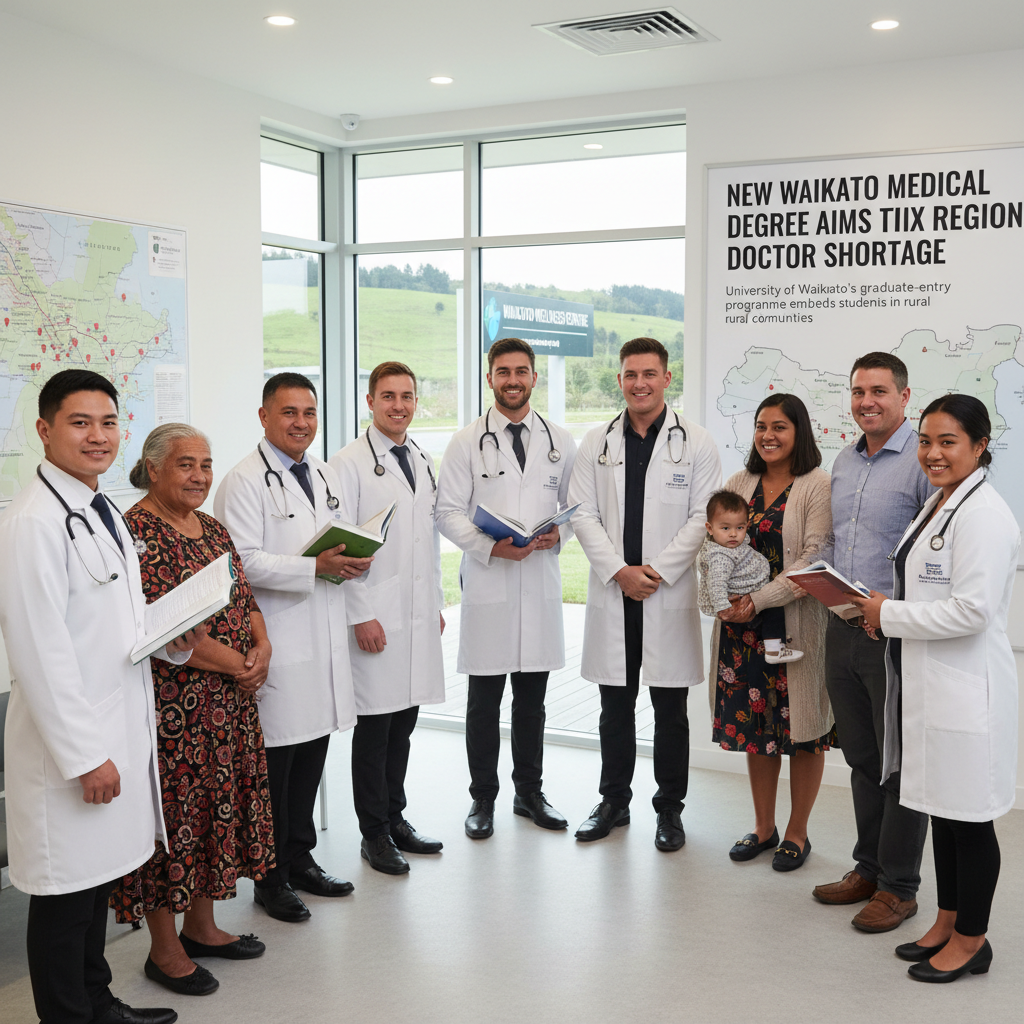
A cornerstone of the degree is its emphasis on primary care. Students will spend approximately half of their clinical placements in general practices and community settings, with the other half in hospitals. This contrasts with existing programmes, which have traditionally been more hospital-centric. The approach is intended to showcase the rewarding nature of general practice, a field facing a critical workforce deficit across Aotearoa, much like in other areas where universities are sending graduates into health care.
The University of Waikato's expansion into medicine is part of a broader strategy to serve regional needs, which includes bolstering its environmental and planning studies. The university is also a hub for important research, with some academics warning of the health impacts of climate change.
Hope for Te Tauihu
For Te Tauihu (the top of the South Island), securing a place as one of the placement regions is a major victory. Marlborough Primary Health chief executive Beth Tester says the organisation worked tirelessly with the Marlborough District Council, Te Whatu Ora, iwi, and local clinics to be selected. The region's inclusion, along with Nelson, makes it the only South Island hub for the new programme.
Tester echoes Dr Marfell's concerns about recruitment, noting that Marlborough needs to attract six to eight new doctors a year, most of whom have recently come from overseas. "People tend to like the bigger centres and so it has been a real challenge," she says.
The long-term immersion is what sets the Waikato degree apart. While the region has hosted medical students from the University of Otago for short-term placements, the new model will embed students within the community for years. The plan for Nelson Marlborough will see second-year students based at Nelson Hospital, before the cohort splits between Nelson and Blenheim for their third year. In their final year, they can choose from a range of courses at both Nelson and Wairau hospitals.
To support this, two new community clinical learning centres will be established in Nelson and Blenheim. Experience shows that once students experience life in the region, they are often keen to stay. "They say this is the best, hidden, delightful place to live and they stay. that's what we've been able to get our GPs over the years," Tester says.
A national strategy
The initiative has drawn praise from national health leaders. Health New Zealand national chief medical officer Dame Helen Stokes-Lampard says the emphasis on community placements will better promote careers in general practice and rural settings.
By providing a greater proportion of training in our provincial centres and in more rural settings, we can hope to have health professionals better equipped to provide care for these communities.
While the University of Otago will have fewer placement options in some regions, an Otago spokesperson confirmed it will continue to train pharmacy, nursing, and other allied health students in Nelson Marlborough, where it has had a presence for 18 years. However, the sentiment from local health leaders is that a more immersive medical programme is a game-changer.
"This is exactly what we need in Te Tauihu to boost our future healthcare workforce and ease the increasing strain on our excellent but pressured hospitals and primary-care clinics," Tester says. The success of this model is seen as crucial for the sustainability of healthcare outside the main urban centres, a key focus for New Zealand's national health policy.
The first tangible results of this investment will be seen when the number of Waikato medical students training in the Nelson Marlborough district begins to grow, with about 20 expected in 2029, increasing to 40 in 2030 and reaching a steady state of 60 students annually from 2031.