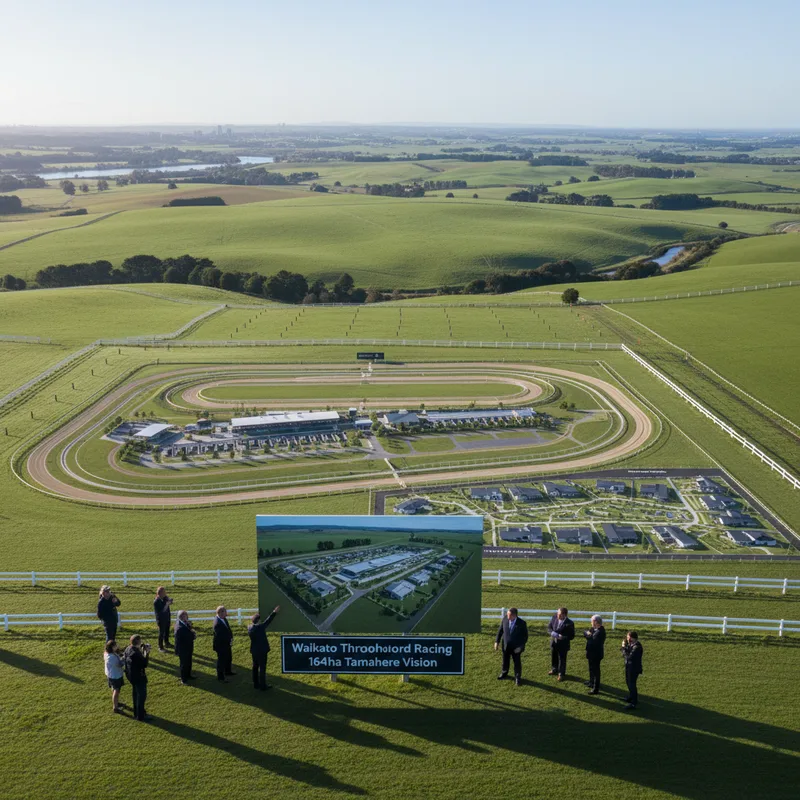
Waikato Thoroughbred Racing has unveiled early plans for a 164-hectare racing hub in Tamahere.
The masterplan includes a retirement village, lifestyle residential blocks, and a small commercial precinct alongside new racing and training facilities.
Waikato Thoroughbred Racing (WTR) showed the first public versions of its Greenfields Project at an information day at Tamahere Community Hall on Sunday. Project director Steve Bramley told attendees the group wants locals “involved and updated at every step along the way”.
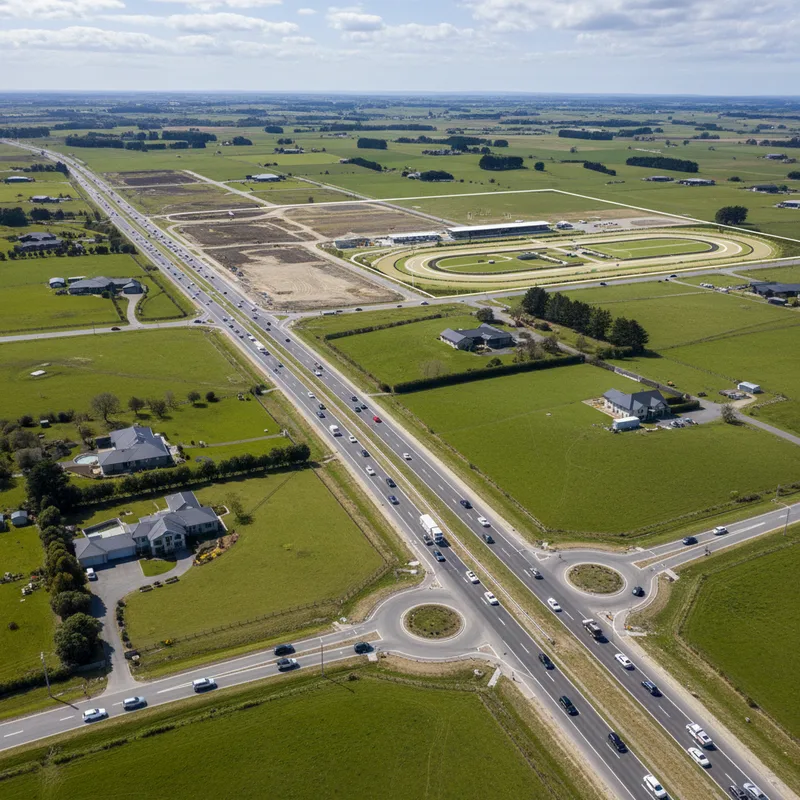
The proposed site sits south of Hamilton and is bordered by State Highway 1, Hooker Rd, Pencarrow Rd and Duncan Rd. Early drawings show a main entrance off the expressway and internal roads looping around the venue and training areas.
Where is the new tamahere racecourse site and what is planned?
The 164ha footprint is designed to host a metropolitan racing and events venue, and a major training centre. WTR says it wants to build on the Waikato’s role in the sport, with Bramley saying, “We are the home and the heart of the racing industry in New Zealand .. two-thirds of the horses in New Zealand are based in the region.”
The early concept plan also sets aside land for a residential lifestyle block, a retirement village and a commercial centre on the south-eastern and western edges. WTR has signalled the non-racing components will sit around the core track and training functions, rather than displacing them.
The project is still at an early stage, and WTR has not released final designs or a detailed staging plan. Bramley said more will be revealed during the consenting process, and ongoing site investigations will keep refining the costs and scope.
For Tamahere residents, the immediate issues raised at the meeting were “boundaries and traffic”. Bramley said managing those concerns would come down to “really effective dialogue”.
When will construction start and how long will it take?
WTR plans to apply for fast-track consenting next month. Bramley said the current working timeframe is eight to 10 years, with completion targeted for the mid-2030s.
“Can we do it a little bit quicker? Maybe. But there's a lot of moving parts, and I've developed a large number of projects, so I think I can safely say mid-2030s is logical at this time,” he said.
Bramley said the numbers were getting clearer as planning progresses. “It’s getting clearer by the month on where the numbers are potentially going to land,” he said.
Can we do it a little bit quicker? Maybe. But there's a lot of moving parts, and I've developed a large number of projects, so I think I can safely say mid-2030s is logical at this time.
Fast-track consenting can shorten parts of the approvals process, but WTR still faces design work, procurement, construction sequencing, and transport planning. The site’s location on the Waikato Expressway corridor also means roading changes could become a major part of delivery.
What happens to te rapa racecourse and its 50ha of land?
The shift to Tamahere would free up about 50ha of central Hamilton land at the current Te Rapa Racecourse. WTR has flagged that land sale as a key funding source for the new build.
That prospect puts Te Rapa among the city’s biggest future redevelopment sites. It also arrives as Hamilton faces pressure to add housing supply and employment land near existing infrastructure.
Property watchers will also compare the move to other large land releases around the city edge, including lifestyle blocks that can change traffic patterns quickly. The Greenfields plan’s residential elements could also interact with the area’s broader growth, including major events that already draw crowds into Hamilton, such as Balloons over Waikato.
Why WTR says the waikato needs a new racing base
Bramley said the wider driver is Project Stamina, an industry-led plan to reshape equine racing infrastructure across New Zealand. WTR has pointed to the need to consolidate facilities and fix long-running investment gaps.
“We just haven’t done the necessary level of infrastructure upgrades for an extended period of time,” Bramley said. He said the project aims to deliver “sustainable, quality racing” supported by modern facilities.
The Greenfields site is intended to take in not only race meetings, but the everyday work of a training centre. Bramley described Cambridge as “one of the largest … training centres in Australasia”, and said the development would build on that strength.
WTR has also formed a neighbours’ liaison group to provide “real-time feedback”. Bramley said the group will help identify pressure points early, including noise, lighting, operating hours, and traffic surges on event days.
How harness racing, scheduling and auckland links fit the plan
The early masterplan includes space that could accommodate harness racing as well as thoroughbreds. WTR has described the future venue as a combined racing and events centre, with the ability to host large meetings.
The wider restructuring follows the 2023 merger of the Waikato, Cambridge and Waipa racing clubs into a single entity operating three venues. Bramley said planning includes rationalising thoroughbred racing across those sites while looking at new options at Greenfields.
One of those options is a tighter calendar with Auckland, with meetings alternating between regions to reduce travel. Bramley said that kind of coordination could improve efficiency for owners, trainers and jockeys, and reduce the cost of moving horses between venues.
Regional planning is also watching similar debates overseas, where urban growth meets animal and sporting land uses. A recent case in Canada, where a Toronto family demanded city action after a coyote attack, has sharpened discussion about how fast-growing cities manage wildlife, open space and perimeter land uses.
In the Waikato, growth pressures already show up in competing land demands, from housing to high-value food production. The region has also pushed for better long-term planning through work outlined in the Waikato sustainability report, which maps local action against the UN’s development goals.
For residents and potential buyers, the biggest near-term question is what fast-track consenting will lock in for land use and transport. WTR expects to lodge its application next month, with more detailed designs released as the mid-2030s build takes shape.